
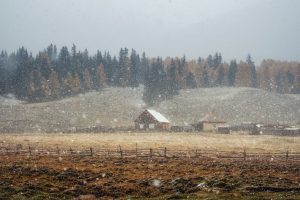
When most people think about weather delays, they picture snow and ice. Winter creates its share of challenges when moving sheds and cabins. But in North Idaho and the greater Spokane area, weather affects transport all year long. Rain, heat, and wind can change a routine move into a complicated one if they are not taken seriously.
At Outback Transport, we plan for more than just freezing temperatures. Every season brings different conditions that impact the road, the job site, and the building itself.
Rain Changes the Ground Beneath Everything
Rain is often underestimated. It does not look dramatic like a snowstorm, but it can create serious complications.
When the ground becomes saturated, soil loses its firmness. Many of the properties we serve include gravel driveways, dirt access roads, wooded areas, and open land. After steady rain, those surfaces can turn soft and unstable. Equipment needs solid footing to safely lift and load a structure. If the ground shifts or sinks, the risk increases.
Mud also affects traction. Even a short stretch of slick driveway can make positioning equipment more difficult. In some cases, waiting a day or two for the ground to firm up makes the move smoother and safer.
Rain can also affect the building itself. Older sheds or cabins may have wood siding, trim, or flooring that absorbs moisture. Doors might swell slightly. Panels can loosen. While this does not mean a building cannot be moved, it does require extra attention and secure strapping.
Heat Brings a Different Set of Pressures
Summer weather seems ideal at first glance. Clear skies and dry roads sound perfect for transport. But high temperatures introduce their own concerns.
Heat places stress on equipment and tires. Long hauls on hot pavements require careful monitoring to prevent overheating. Asphalt driveways can soften at extreme temperatures, especially under heavy loads. This can leave marks or minor impressions if not managed properly.
Materials on the building respond to heat as well. Roofing materials and exterior finishes may expand slightly. Sealants can become more pliable. This makes proper support and balance critical during lifting and transport.
Heat also affects the crew. Moving a portable building is physical work. Staying hydrated and pacing the day properly keeps everyone focused and safe. A move is never rushed just to beat the heat. Careful timing makes all the difference.
Wind Creates Stability Challenges
Wind is one of the most unpredictable factors in portable building transport.
Sheds and cabins have broad, flat sides. When wind hits them, it creates pressure much like it would against a billboard or a sail. Even moderate gusts can make lifting and positioning more delicate.
Crosswinds on open highways or rural roads require slower speeds and heightened awareness. This is where experience and pilot car support play a major role. Monitoring wind conditions ahead of time helps determine whether a move should proceed or be rescheduled.
Placement at the destination also becomes more precise in windy conditions. Setting a building onto its new site requires steady control. Strong gusts can interfere with that final positioning, so wind speed is always taken seriously.
It Is Often the Combination That Matters Most
Weather rarely shows up in a single form. Rain one day followed by heat the next can create uneven ground conditions. Wind combined with light rain reduces visibility while adding stability concerns. Even a calm morning can turn breezy by afternoon.
That is why transport planning includes looking at recent weather patterns, not just the forecast for the day of the move. Understanding what the ground has been through in the days leading up to transport helps avoid surprises.
Smart Planning Makes All the Difference
While weather cannot be controlled, preparation can.
A proper site check before moving day helps identify drainage problems, tight turns, soft soil, and obstacles. Monitoring forecasts allows for adjustments when needed. Having the right equipment, skids, and support vehicles ensures stability under a variety of conditions.
Communication with property owners is just as important. When clients understand how rain, heat, or wind might affect timing, expectations stay realistic, and stress stays low.
Weather Is Part of the Process
In this region, weather shifts are simply part of life. Rain rolls through. Summer temperatures climb. Wind picks up across open stretches of road. These conditions do not automatically stop the move, but they do require awareness and experience.
Looking beyond winter weather gives property owners a clearer picture of what goes into safely transporting a portable building. When every season is considered and planned for, sheds and cabins arrive securely and ready for their next location. Contact Outback Transport LLC at 208.490.1482 today or visit us online for more information!
Leave a Reply